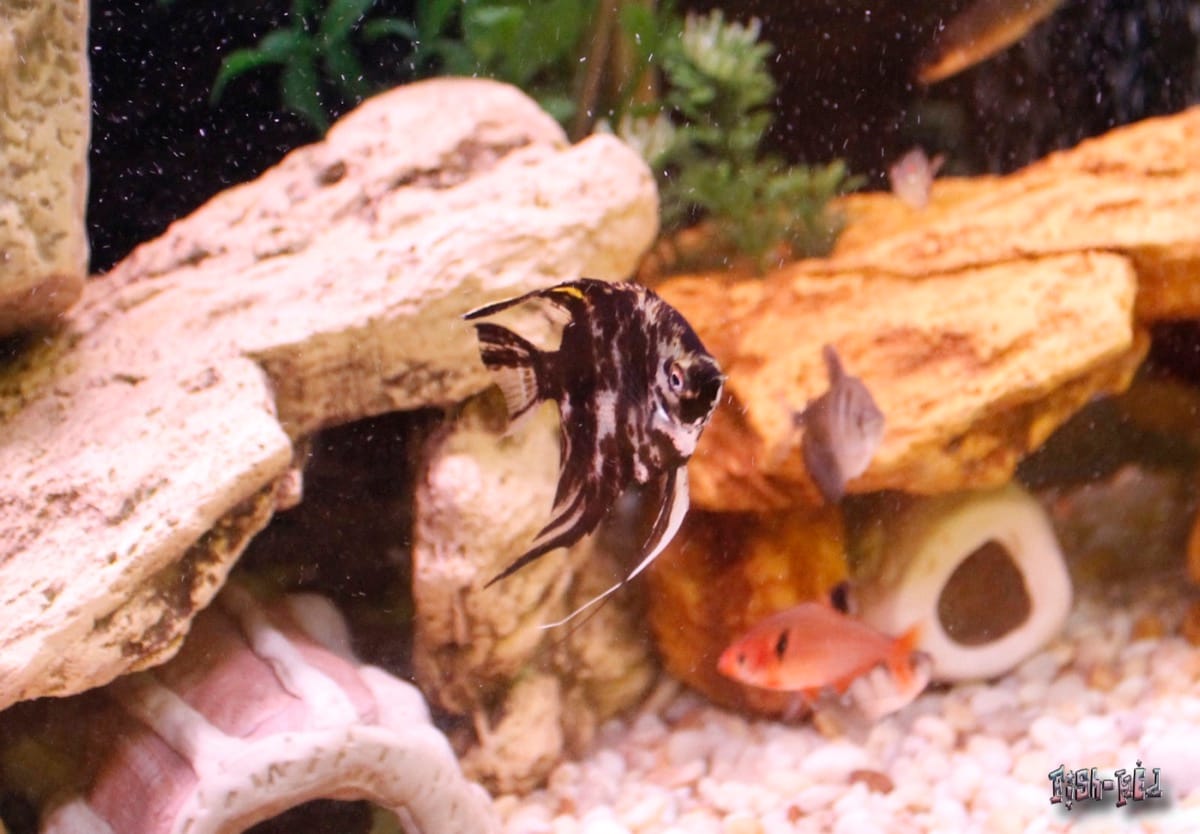
Measure height as well as length before buying angelfish, and plan for relationships to change as juveniles mature. A tall aquarium does not by itself make a pair compatible or protect small tankmates from predation.
- Temperature24-28 C
- pH6.0-7.4
- Tank planning200 L+ nominal; 100 x 40 x 50 cm; conditional pair-only plan
- DifficultyIntermediate; adult territory planning
| Long-term plan | One established adult pair only; no extra companions |
|---|---|
| Before buying | Check furnished adult swimming space and the pair history |
| Exit plan | Ready, suitable separate housing if either fish is cornered or denied food |
Care parameters and their limits
- Temperature: 24-28 C
- Tankwise routine-care planning band within the SF 24-30 C range. Not a treatment temperature or a requirement to run at the warmest endpoint. Seriously Fish: Pterophyllum scalare
- pH: 6.0-7.4
- SF husbandry reference. Check the conditions used for the particular domestic stock; wild fish require separate assessment. Seriously Fish: Pterophyllum scalare
- General hardness: 2-15 dGH
- Tankwise planning band within the SF 0-15 dGH reference; zero hardness is not a default target for a new keeper. Seriously Fish: Pterophyllum scalare
- Adult size: Up to 15 cm standard length; 20 cm+ tall
- SF reports 150 mm SL and height of 20 cm or more. Standard length excludes the tail; vertical fin span is a separate space constraint. Seriously Fish: Pterophyllum scalare
- Tank planning: 200 L+ nominal; 100 x 40 x 50 cm; conditional pair-only plan
- Tankwise uses these SF reference dimensions (length x width x height) as a conditional long-term plan for one established adult pair only, without tankmates. This is editorial planning, not a source-certified pair minimum. About 200 L is gross geometry, not usable water. Check adult fin clearance, turning space and separate retreats after furnishing, and have suitable separate housing ready; the dimensions alone do not guarantee compatibility or permanent adult-group capacity. Seriously Fish: Pterophyllum scalareFishkeeper: Angelfish
- Lifespan: No universal estimate supplied
- The consulted species sources do not establish a general captive lifespan across domestic strains and purchase ages. Seriously Fish: Pterophyllum scalare
- Diet: Omnivore; prepared food plus small invertebrates
- SF describes acceptance of pellets or flakes and live or frozen foods; a varied aquarium diet is not the same as the wild feeding record. Seriously Fish: Pterophyllum scalare
- Social plan: One established adult pair; no tankmates
- Conditional editorial plan for two mature fish already living as a compatible pair, not two unsexed juveniles or an assumed male-female match. Sources describe groups and territorial conflict but do not certify a pair-specific minimum. Separate if either fish is persistently cornered or excluded from food. This page supplies no adult-group purchasing count or tank capacity; SF's six juveniles concern pair formation, not permanent stocking. Seriously Fish: Pterophyllum scalareFishkeeper: Angelfish
The missing measurement is height
The familiar 15 cm figure is standard length, excluding the tail. Adult angelfish can also stand 20 cm or more high across their fins, according to Seriously Fish's species profile. That vertical span changes the aquarium choice. A long, shallow tank is not equivalent to a tall one, and a narrow tower does not supply the horizontal territory missing from its base.
For one established adult pair with no additional companions, Tankwise uses at least 100 x 40 x 50 cm (length x width x height), about 200 L nominal, as a conditional long-term purchasing plan. The dimensions come from the SF reference; assigning them to this pair-only plan is our editorial judgement, not a source-certified minimum for a pair. Neither SF nor the accessible Fishkeeper account establishes a permanent adult-group capacity for this tank.
Before buying, check the furnished space, not just the litre label. Glass, the air gap, substrate and decor reduce the nominal volume. Both adults must be able to swim and turn with their fins extended, without squeezing between furnishings or having their vertical clearance cut off by branches. Provide sight breaks and separate retreats without blocking those routes, and have suitable separate housing ready. If the proposed layout or backup cannot meet these conditions, do not buy the pair for this setup; choose different accommodation or postpone the purchase. More height alone cannot repair a cramped footprint.
Arrange tall plants and wood to interrupt sight lines while leaving broad passages for the fins. Keep filtration established and flow gentle enough for the fish to hold position comfortably. Taller water does not replace oxygenation or regular waste removal.
A juvenile group can become a territorial problem
Both Fishkeeper and SF describe group keeping, but neither supplies a permanent adult-group count for the reference aquarium. SF's suggestion to begin with six juveniles is a breeding strategy for obtaining a pair, not permission to keep six adults indefinitely in it. This page does not provide an adult-group purchasing count or tank-size plan. If a group is your goal, arrange an individual assessment of a larger aquarium, adult territories and relocation options with an experienced angelfish keeper or specialist retailer before buying; do not use the pair-only plan as a group allowance.
The pair-only plan means two mature fish already living together as an established pair. Ask the supplier about their observed pairing and cohabitation history, including whether either fish is chased away from food or shelter. Two unsexed shop juveniles do not meet that condition, and buying an apparent male and female does not establish compatibility; SF notes that sex is difficult to determine outside spawning. Even an established pair may become unsafe together. Have a separate, established aquarium suitable for an adult ready before bringing them home, rather than relying on finding a new owner after aggression starts.
Watch the fish at feeding time and between meals. A fish confined to a corner, repeatedly driven behind the filter or denied access to food is not merely settling into a harmless hierarchy. End the unsafe combination before injury; adding more fish or rearranging a few ornaments is not a dependable solution.
Choose neighbours for the adults you will have
No tankmates are included in the pair-only space plan above. Adding any companion requires a separate space and territory assessment, not merely matching water parameters. Adult angels can eat small fish such as neon tetras. The species profile explicitly flags this predation risk; a peaceful juvenile stage is not evidence that the combination will remain safe. Avoid fin-nippers, and assess the adult size, territorial behaviour and long-term water needs of every proposed neighbour. A bottom-dweller still enters the territory of a spawning pair.
For domestic stock, our routine planning band is 24-28 C and GH 2-15 dGH, within SF's broader 24-30 C and 0-15 dGH reference ranges; pH 6.0-7.4 follows that reference. These are planning values, not instructions to push an established aquarium to an endpoint. Ask the supplier about the stock's water, and do not choose tankmates whose suitable conditions only meet at an uncomfortable extreme.
Check who gets the food, not just who approaches
Use appropriately sized complete pellets or flakes, with small frozen invertebrates for variety, as described in the feeding reference. Watch each angel swallow food. A dominant fish may be conspicuous at the front while another gets very little; separate feeding positions can help you see whether everyone is actually eating.
Remove leftovers and review ammonia, nitrite and waste accumulation when fish grow or the population changes. Match partial water changes to those observations rather than assuming a fixed weekly percentage covers an expanding group. If food access stays unequal, change the social arrangement instead of increasing the ration for the whole tank.
Weight loss is not proof of internal parasites
A thin angelfish, poor appetite or unusual faeces does not identify a parasite. Check whether the fish can reach food without being chased, record temperature and water-test results, and note recent arrivals or treatments. Merck recommends environmental assessment and diagnostic testing, and discourages medication without a diagnosis.
Progressive weight loss, repeated food refusal or wounds need prompt advice from an aquatic veterinarian or qualified fish-health professional; laboured breathing, loss of balance or multiple affected fish require urgent help. Do not begin routine deworming and wait one or two weeks to see what happens. No blanket salt, heat or drug course is recommended here. Any treatment must fit the diagnosis and exact product label, including companions, plants and biofilter effects. Stop adding improvised products and seek urgent advice if distress increases.
New to the words? See the aquarium glossary.
Sources and research notes
The reference aquarium is not an adult-group capacity. The narrower temperature and hardness bands are Tankwise planning choices for domestic stock, not wild extremes or treatment settings. No general captive lifespan is asserted.
Content reviewed 2026-10-14. Tankwise Editorial provides husbandry information, not veterinary diagnosis.
- Seriously Fish: Pterophyllum scalare
15 cm SL, 20 cm+ height, 100 x 40 x 50 cm aquarium, water ranges, diet, group conflict, spawning territoriality and predation on small fish. Secondary husbandry profile. The six-juvenile suggestion concerns breeding, not permanent adult capacity. No universal lifespan supplied; its certainty that a pair will form is not adopted. Accessed 2026-10-14.
- Fishkeeper: Angelfish
Large, well-furnished group aquarium and the risk of mature fish eating smaller companions. Commercial retailer profile; only the accessible species introduction is used, not unavailable detail or its sex-selection shortcut. Accessed 2026-10-14.
- Merck Veterinary Manual: Management of Aquarium Fish
History, water-quality assessment, professional diagnostic testing and the risks of medication without a diagnosis. Veterinary reference, not a species-specific home-treatment protocol. No drug doses are reproduced here. Accessed 2026-10-14.