Columnaris in Fish: Signs and Treatment
Pale patches are not enough to diagnose columnaris. Learn urgent warning signs, useful checks, and why treatment needs more than a guessed antibiotic.
A pale mouth lesion, a spreading patch or damaged gills needs investigation, not a visual guess at an antibiotic. Columnaris is a bacterial disease that can progress rapidly. Contact an aquatic veterinarian or qualified fish-health professional promptly; breathing difficulty, rapidly worsening lesions or deaths warrant urgent help. Check the water and aeration while arranging that help, rather than waiting to see whether an antifungal works.
Why “mouth fungus” is an unreliable name
Columnaris is associated with Flavobacterium columnare, a bacterium, despite common names such as cottonmouth and saddleback. Skin lesions may have slimy or cotton-like material. The Merck guide to fish diseases describes these signs, but they are not a diagnosis by themselves.
Water molds such as Saprolegnia can also produce gray-white, cotton-like growth on damaged skin, fins or gills. Fin injury, other infections and water-quality damage can complicate the picture. The apparent fluffiness or flatness of a patch is not a reliable way to select a drug. Small discrete spots raise different questions, covered in the freshwater ich guide, but that appearance also needs confirmation.
Take photographs from a consistent angle without repeatedly catching the fish. Note where the lesion started, whether it is spreading, how the fish breathes and eats, and whether other fish are affected. These observations help a clinician decide what to examine; do not scrape a lesion or clip gills yourself.
Decide what cannot wait
- Gasping, loss of balance, worsening gill signs or deaths: seek urgent veterinary or diagnostic-laboratory assistance. Restore a failed air supply or circulation if safe, and obtain water readings without delaying help.
- A mouth or body lesion that is spreading, even if the fish still eats: contact a fish-health professional promptly. Do not wait for severe breathing signs or for every resident to become affected.
- A stable mark after a known injury: document it, check conditions and arrange assessment if its cause is uncertain. New tissue loss, spreading discoloration or altered behavior moves it out of a simple observation situation.
This is an urgency framework, not a diagnostic scoring system. Merck describes acute mortality with columnaris and variation in strain virulence; a fixed “wait two days” rule is not appropriate.
Stabilize the environment without inventing a temperature cure
Measure temperature, pH, ammonia and nitrite; inspect the filter and aeration and record recent maintenance, transport and additions. Poor water quality, handling, crowding and other stresses can predispose fish to bacterial disease, according to UF/IFAS's antibiotic guidance. This is not proof that only neglected or visibly stressed fish become infected.
Correct a documented water problem with appropriately conditioned, temperature-compatible replacement water and professional guidance where chemistry differs substantially. Do not empty and disinfect an occupied aquarium or replace all biological media as a first response. Keep conditions appropriate for the species; do not copy an ich heater-setting recommendation, suddenly chill the tank, or treat 28°C as a universal dividing line between safe and unsafe water. Merck explains that temperature affects both fish physiology and immune function, with species-specific limits.
If the tank is long neglected with very low pH and high ammonia, obtain urgent advice before a major chemistry correction: a sudden pH increase can make ammonia more toxic. This exception is explained under old tank syndrome in the Merck owner guide.
What turns suspicion into a treatment plan
A professional may make a presumptive identification from a wet mount of affected skin or gill tissue. Bacterial culture and antimicrobial-susceptibility testing help determine which antibiotic is appropriate. Merck's bacterial-disease guidance and UF/IFAS's antibiotic guidance support this diagnosis-led approach.
Where antibiotics are indicated, the choice is not just a brand of liquid. The infection site, whether the fish is eating, species, water chemistry and severity influence the drug and administration route. A bath does not reliably deliver every antibiotic to an internal infection. Antibiotic baths can also inhibit the bacteria in the biological filter. A clinician may choose medicated food, a bath or another route; injections and preparation of prescription feeds are not do-it-yourself instructions in this guide.
Ask about samples before starting an antibiotic when possible, because prior antibiotic treatment can impair culture results. Do not delay an urgent case on your own while waiting for laboratory results: the treating professional can decide whether treatment is needed after samples are collected. UF/IFAS describes the information and samples a diagnostic service needs.
Separate three decisions: isolation, exposure and medication
- Does the sick fish need protection?
- A separate hospital system may help if tankmates harass it or a treatment cannot be used in the display. It must have appropriate temperature, aeration and a plan to monitor and control ammonia and nitrite. An unmonitored bowl is not a safer hospital.
- Have the other fish been exposed?
- Removing one fish does not prove the display is free of infection. Watch all residents and stop transferring fish, water, nets or other wet equipment to unaffected systems while obtaining advice.
- Does the entire system need medication?
- That depends on the diagnosis and treatment plan, not just the number of fish with patches. Tell the professional about shrimp, snails, plants and biological filtration before choosing a product or treatment location.
These decisions apply Merck's targeted-treatment and biosecurity principles; they do not prescribe blanket preventive antibiotics for unaffected tanks.
Medication boundaries and reassessment
Use only a product and administration route appropriate to the diagnosed problem, fish and local legal requirements. Follow the exact label and the prescribing professional's directions, including water chemistry, dose, duration, water changes and filtration instructions. Check compatibility with invertebrates and plants. Do not substitute a human or livestock product, combine antibiotics, rotate bottles after a day, or use a generic half dose for “sensitive fish.” UF/IFAS explains how incorrect dosing and indiscriminate switching promote treatment failure and resistance.
Do not add salt or heat as an automatic companion treatment. If compatibility, concentration or resident tolerance is unknown, ask before adding it. Keep a written record of each dose, appetite, breathing, lesion changes and water tests.
Sudden distress during exposure is not a reason to push through the next dose. Stop adding the product, maintain aeration, follow its adverse-reaction instructions and obtain urgent professional advice on removal or transfer. Further tissue loss, new affected fish or deaths during treatment require prompt reassessment rather than doubling the dose or adding another drug. Agree a follow-up point with the treating professional from the start.
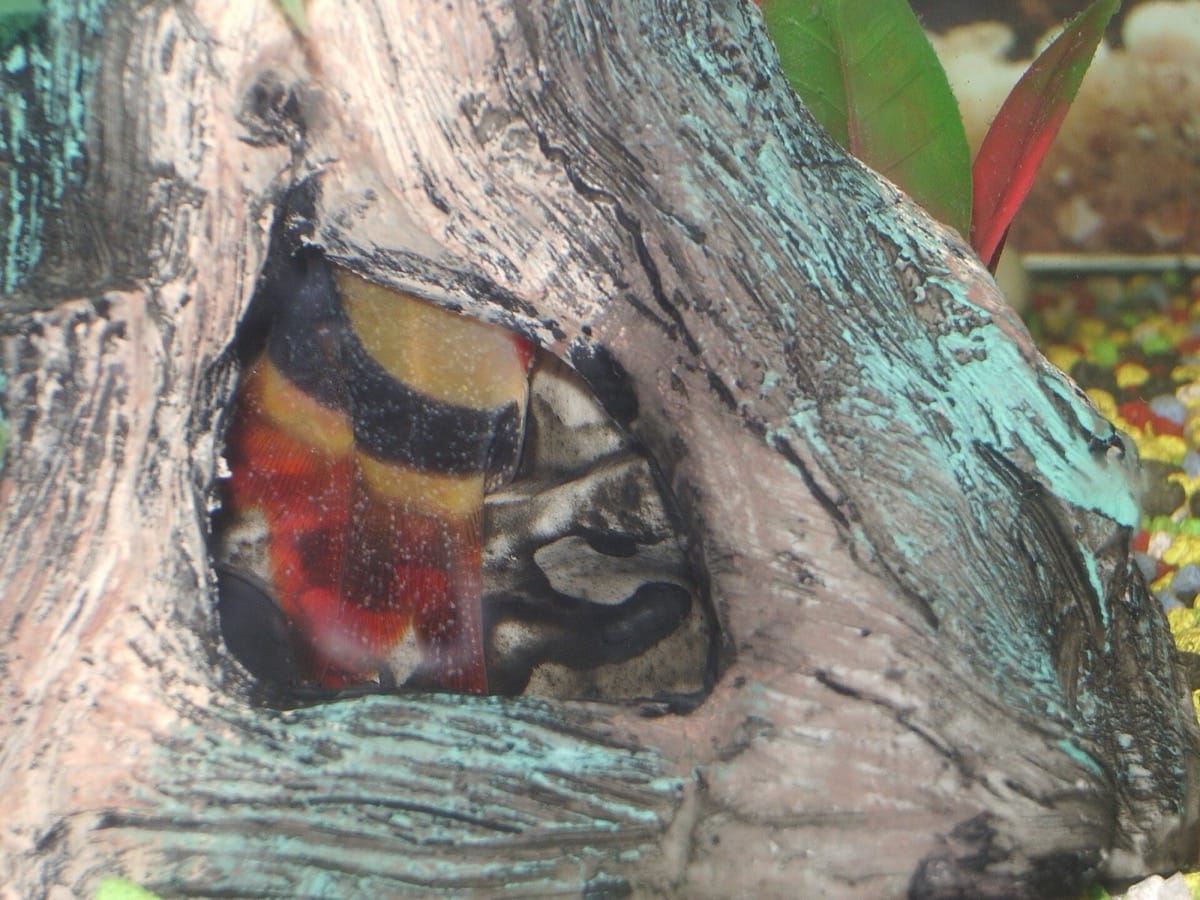
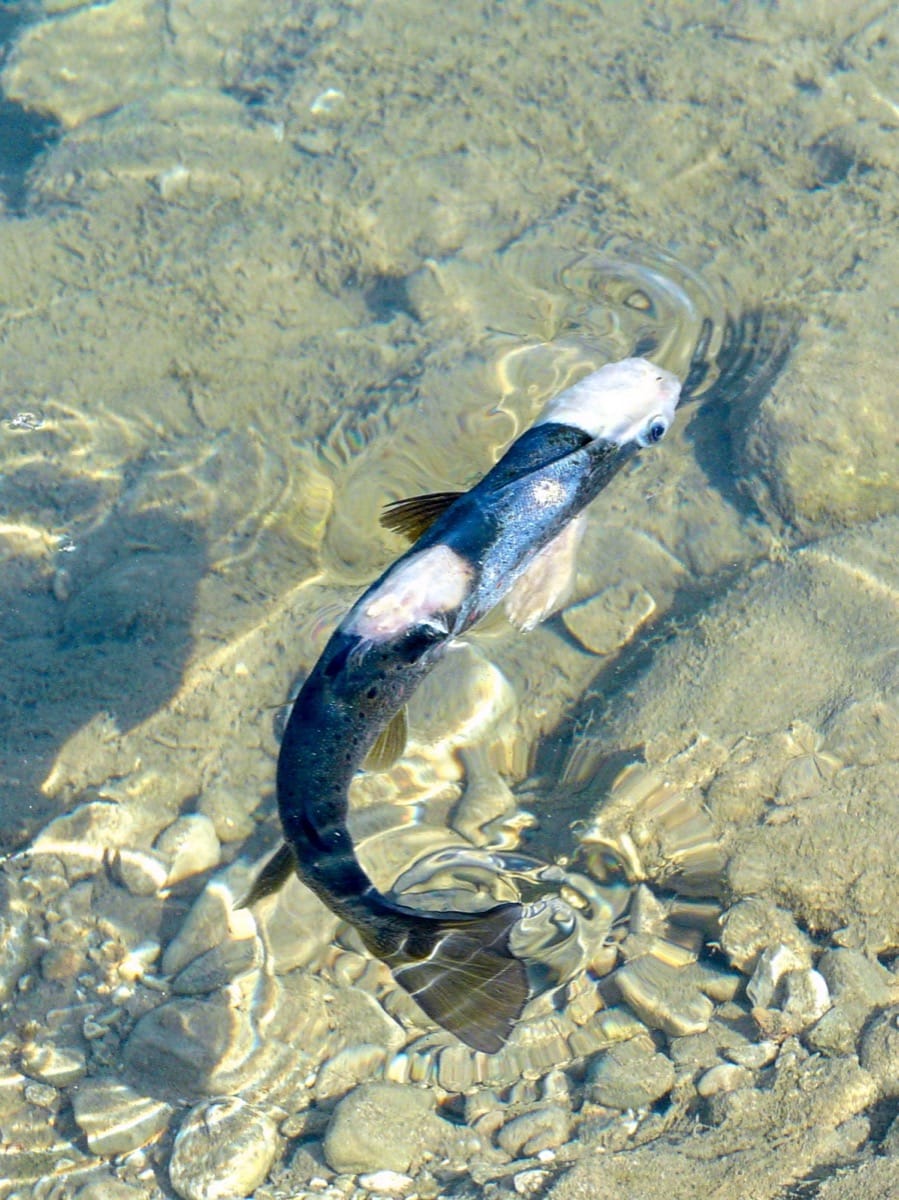
Tankwise Editorial is not a veterinary service. The cover image shows pale areas on a fish; a photograph cannot establish their cause. Read about our editorial approach.