How to Treat Ich (White Spot Disease)
Suspect freshwater ich? Learn what white spots cannot confirm, how treatment targets the life cycle, and when heat or medication can put fish at risk.
Suspected freshwater ich needs prompt attention, but white spots alone do not confirm it. Check water quality and breathing, prevent transfers to other tanks, and contact an aquatic veterinarian or qualified fish-health professional for diagnosis and a suitable treatment plan. Do not wait for every fish to develop spots, turn up the heater as a default, or combine remedies while guessing.
White spots are a clue, not a diagnosis
Freshwater ich is caused by Ichthyophthirius multifiliis. Small white spots on the skin or fins, rubbing against objects, clamped fins and reduced appetite can occur. Fish with infection concentrated in the gills may have breathing difficulty without visible spots. UF/IFAS explains why identification under a microscope is needed: other diseases can resemble ich. A trained professional can examine appropriate skin, fin or gill samples; do not attempt a gill biopsy at home.
A broad pale patch or cotton-like growth is not simply a larger white spot. It warrants a different investigation, including possibilities discussed in our columnaris guide. Appearance cannot reliably choose between an antibacterial, an antifungal and an antiparasitic treatment.
Gasping, rapid deterioration or deaths are urgent. Seek professional help immediately while checking aeration and water conditions. If no local fish veterinarian is available, ask an aquatic diagnostic laboratory or veterinary practice for a referral. A photograph can help describe the problem, but does not replace examination.
Why disappearing spots do not mean treatment is finished
The UF/IFAS life-cycle account distinguishes three stages that change what the keeper needs to do:
| Stage | What it means for treatment |
|---|---|
| Feeding parasite on the fish: trophont | Fish tissue and mucus protect it from chemical treatment. A visible spot is not a target that disappears as soon as medicine is added. |
| Reproducing cyst in the environment: tomont | The parasite has left the fish but remains in the system. The protected cyst can produce many new parasites. |
| Free-swimming infective stage: theront | This is the vulnerable stage that appropriately timed treatment targets. New waves can emerge after an earlier dose. |
Removing only the visibly affected fish therefore does not clear an exposed aquarium. The plan must cover the exposed fish and contaminated system. That is not permission to add an incompatible medicine to a tank containing shrimp, snails or sensitive fish: a professional may need to design separate treatment and fish-free system management.
Before the first dose: check the tank and the product
- Record conditions. Measure temperature, pH, ammonia and nitrite; check the filter and aeration. Save the readings and note recent fish, plant or equipment additions. Correct identified environmental problems without abrupt temperature or chemistry changes. If water is severely abnormal or very different from the replacement supply, get advice on the correction rather than making a blind large change.
- List every resident. Include fish species, shrimp, snails and plants. Check the exact product label for their compatibility, water-chemistry restrictions and temperature limits. Do not assume that a product safe for one species or formulation is safe for another.
- Establish the actual treatment volume. Account for displaced water and any connected equipment included in treatment. The tank volume calculator estimates geometric capacity, not a medication dose or the exact water remaining around substrate and decoration.
- Write down the schedule. Follow the locally applicable product label and professional instructions for dose, intervals, aeration, water changes, filtration and completion. Remove carbon or change UV operation only if the treatment instructions require it; do not disable biological filtration by default.
Merck's treatment considerations explain why water volume, administration route and the particular chemical matter. Copper is toxic to invertebrates and plants; safe use also depends on water chemistry and appropriate monitoring. Raw copper-sulfate guidance is not interchangeable with the label for a formulated aquarium product. If compatibility or monitoring is unclear, do not improvise.
Heat, salt and reduced doses are not universal shortcuts
Water temperature changes the speed of the parasite's life cycle and therefore treatment timing. It also affects the fish. Keep within the species' requirements and the treatment plan; do not use heat alone as a routine cure or raise every tank to a fixed temperature. The Merck ich guidance calls for appropriately timed medical treatment, not a universal heater setting.
Salt can be useful in specific protocols, but its concentration, exposure time and the tolerance of every resident matter. The salt discussion in UF/IFAS FA006 is conditional, not a recommendation to salt every community aquarium. Do not add salt on top of another treatment unless that combination is explicitly supported by the label or treating professional.
Likewise, do not automatically halve a medicine for a scaleless fish. A reduced dose specified for a particular chemical and species is not a rule for all medicines. Where the label does not cover the fish, ask for a suitable alternative rather than guessing a weaker dose.
Follow the course, with a clear stop point for adverse effects
Follow the treatment plan even if visible spots disappear; do not shorten, extend or intensify it based on appearance alone. There is no single number of days suitable for every temperature and product. Record breathing, appetite, new lesions, deaths, water tests and doses. Some treatments affect biological filtration, so monitor ammonia and nitrite as directed.
If fish suddenly gasp more, lose balance or attempt to jump during chemical exposure, stop adding treatment and seek urgent advice. Maintain aeration and follow the product's adverse-reaction/removal instructions or the treating professional's directions. UF/IFAS specifically warns that sick fish may not tolerate formalin treatment and describes removing formalin exposure with clean, well-oxygenated water. Do not assume that adding a second chemical will reverse a reaction, or that finishing a course overrides signs of toxicity.
Continued deterioration, new deaths or recurrence require reassessment of diagnosis, dosing accuracy, water conditions and treatment timing, not another guessed remedy. Follow-up examination may be needed to establish control.
Prevent the next transfer
Ich can enter with infected fish or contaminated wet equipment, plants and other material. Some survivors can carry the parasite; that does not mean it is permanently present in every aquarium. Keep nets and siphons separate during an outbreak, remove dead fish promptly and handle waste water so it cannot reach another system. Remove debris as part of the agreed treatment schedule rather than stripping the biological filter.
For new arrivals, UF/IFAS recommends a minimum 30-day quarantine for ich prevention; the appropriate quarantine plan can be longer or different for other risks. Observation alone does not certify a fish parasite-free. For a consultation, provide species, actual water readings, the timeline and the exact names and amounts of products already used; UF/IFAS's diagnostic-submission guide explains why this history and a separate water sample matter.
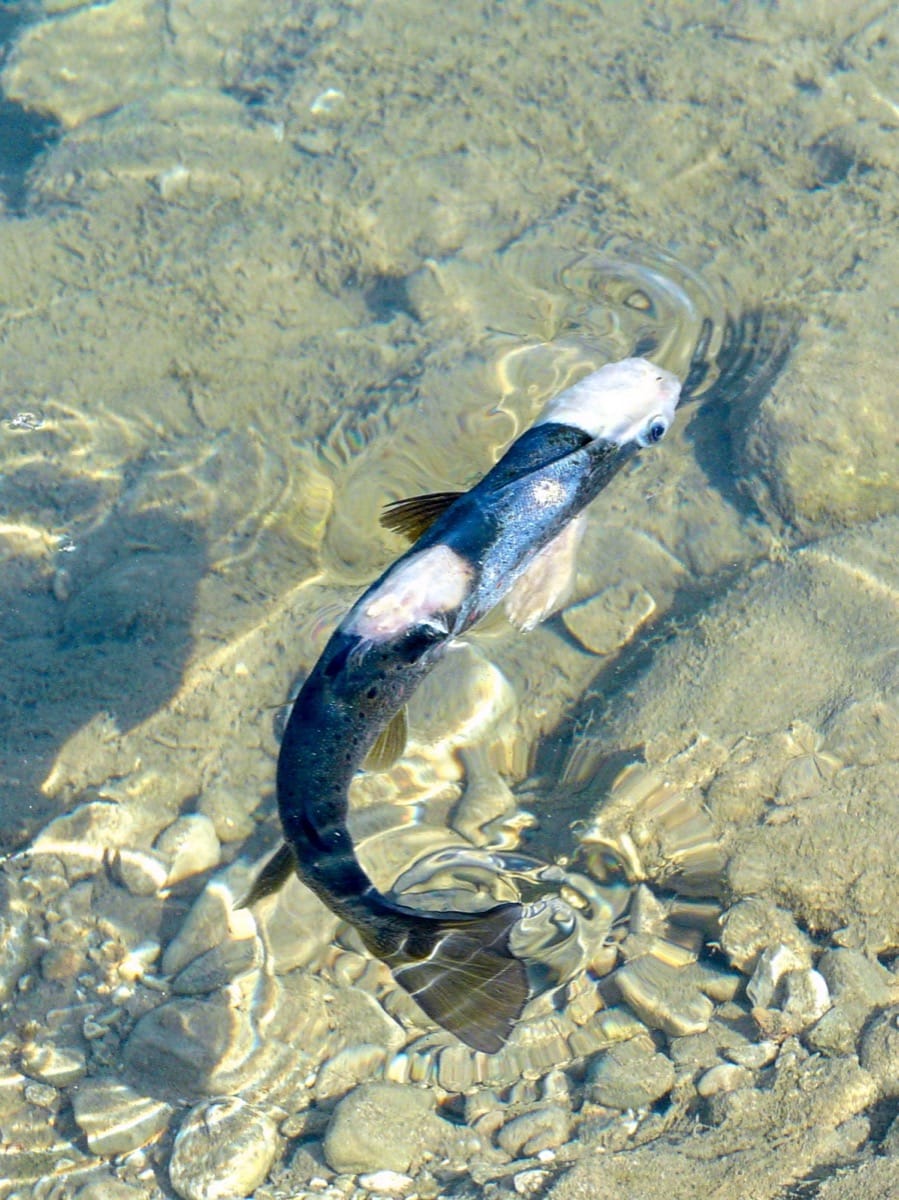
Tankwise Editorial provides researched care information, not a diagnosis or veterinary prescription. The cover photograph illustrates visible white specks, not a diagnostic test. About our editorial work.