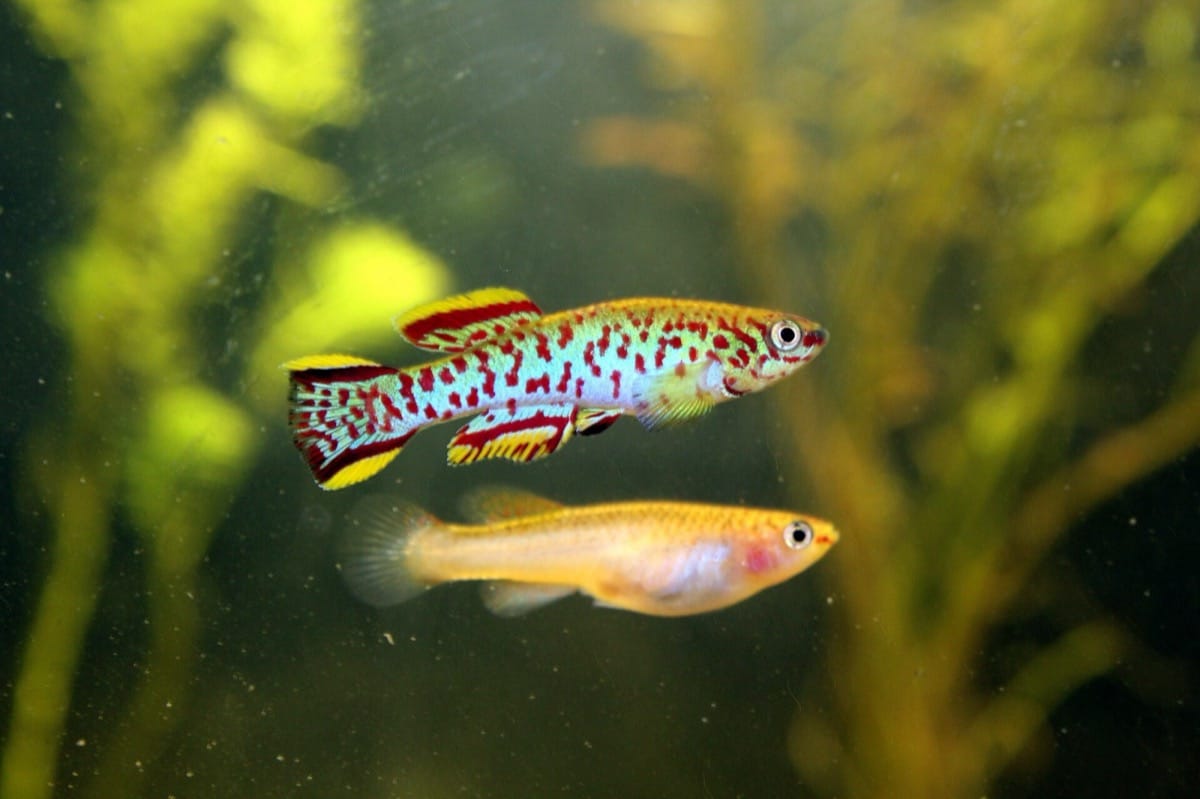
A stunning, easy-to-breed killifish, though short-lived and best for a species tank.
- Temperature22–26 °C
- pH6–7.5
- Minimum tank50 L
- DifficultyIntermediate
Behaviour and habits
The Gardneri killifish is one of the more forgiving killifish and among the most colourful, the males flashing blue, yellow and red as they display. It is best kept in a pair or a small group in a planted species tank, since males can be quarrelsome with each other, and it is an accomplished jumper, so a tight lid is essential. Killifish are naturally short-lived — often two to three years — which is part of keeping them, and many breed readily in the aquarium.
What to feed, and how often
A carnivore that wants live and frozen foods — bloodworm, daphnia, brineshrimp and the odd insect — fed one or two small meals a day. It is not a fish for a diet of dry food alone, and variety keeps it in colour and condition.
Water changes and maintenance
Change about 20–25% weekly in soft-to-neutral water, matched closely. It dislikes hard, alkaline water and sudden changes, and it does best in a stable, planted tank with cover.
Care and how easy it is
Best in a planted species tank with a pair or small group, a tight lid and live or frozen food; short-lived by nature.
Common health problems
Sensitive to poor water; prone to fungal and bacterial problems when stressed.
If it gets sick
Keep the water clean, soft and stable, feed live or frozen food, and treat early in isolation if a fish shows fin damage.
Good tank mates
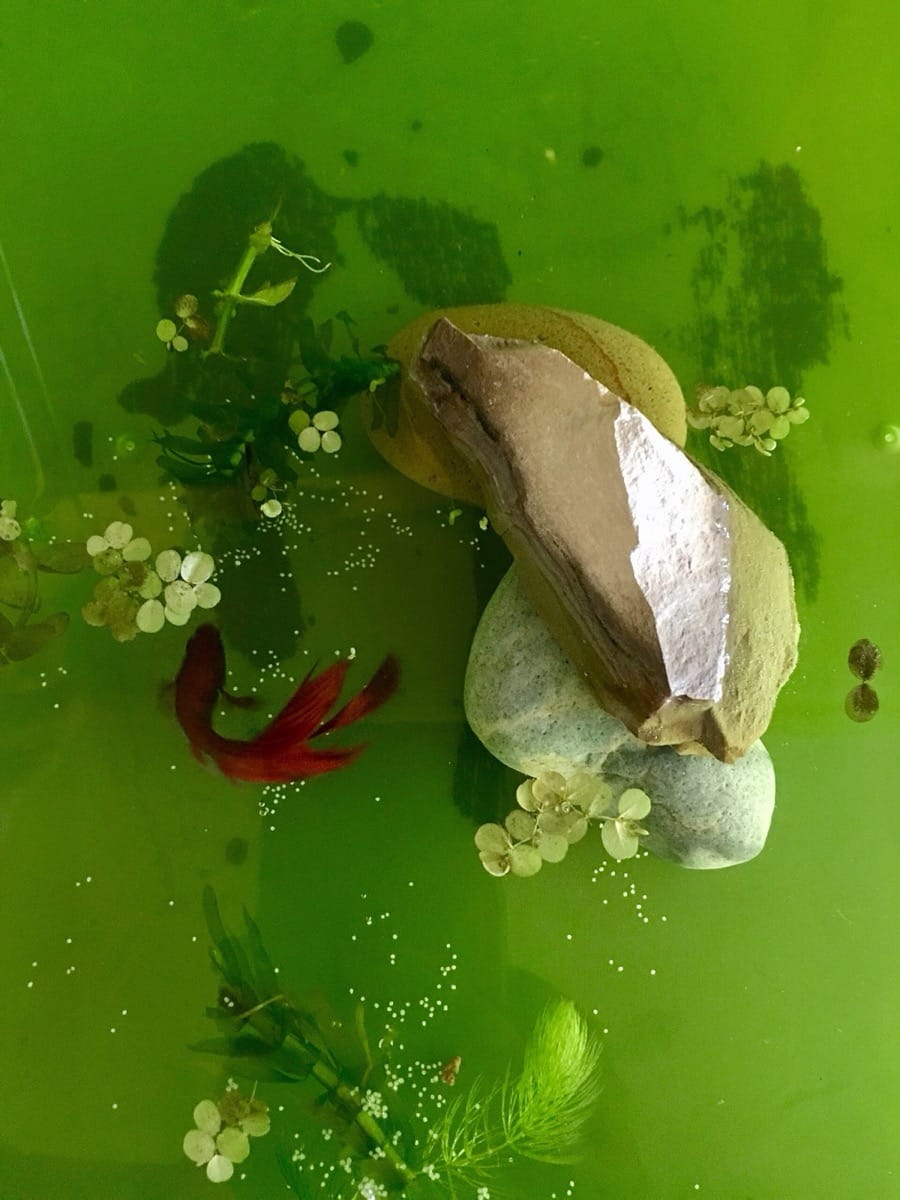
- 24-26 C
- pH 6.5-7.5
- 40 L+; 45 x 30 cm base
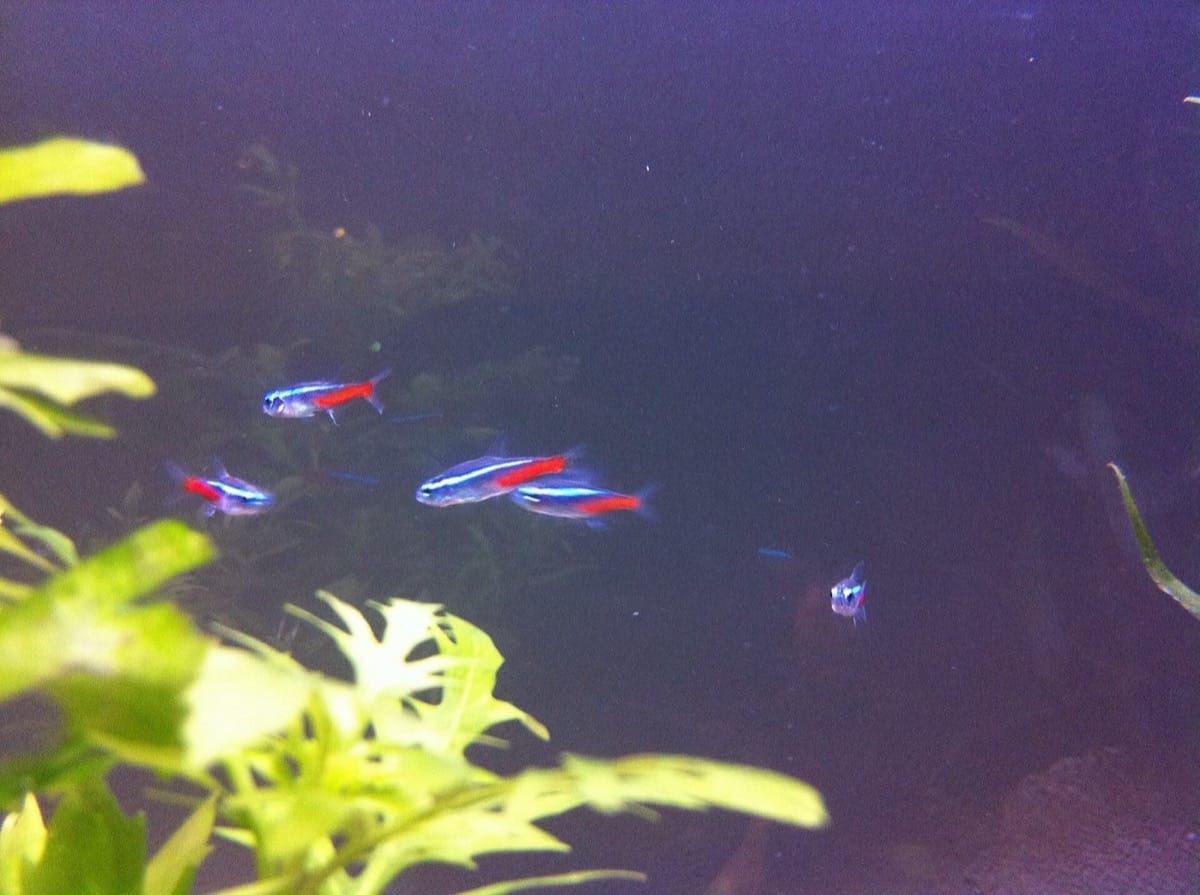
- 21-25 C
- pH 6.0-7.5
- 60 L+; 60 x 30 cm base
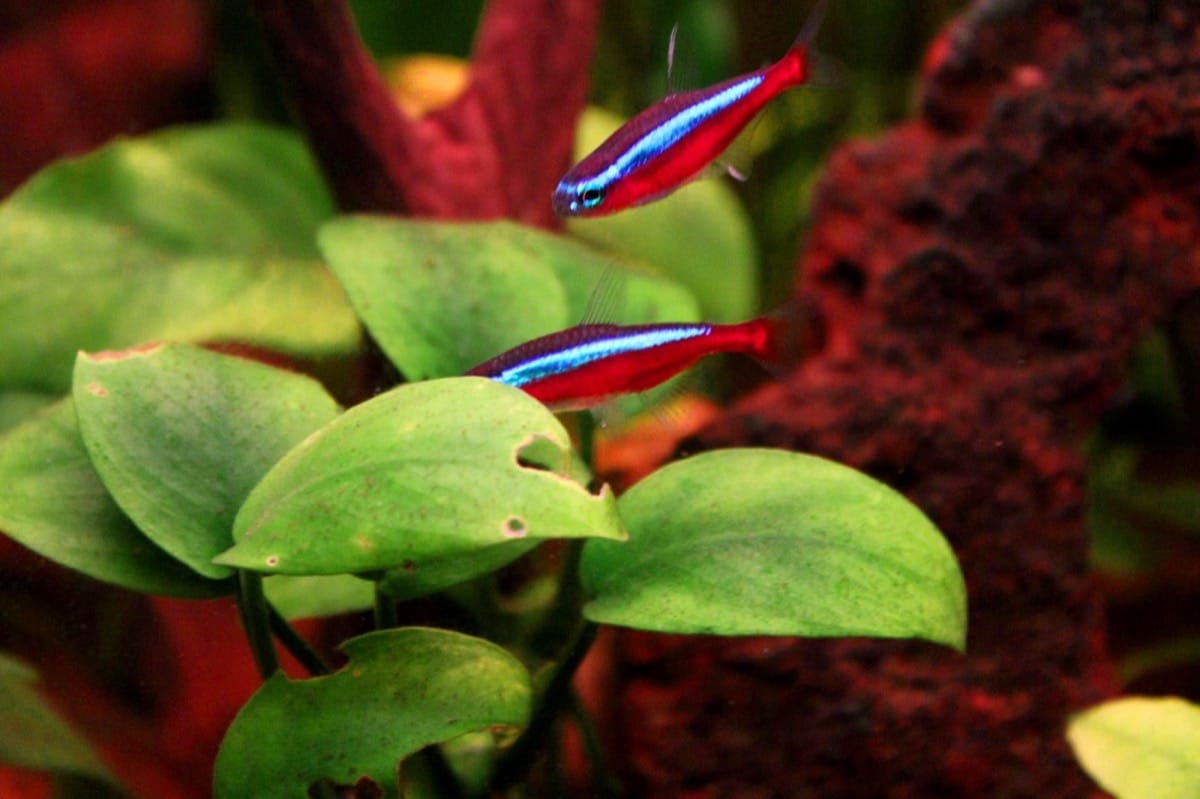
- 23–28°C
- pH 5–6.8
- 60 L+
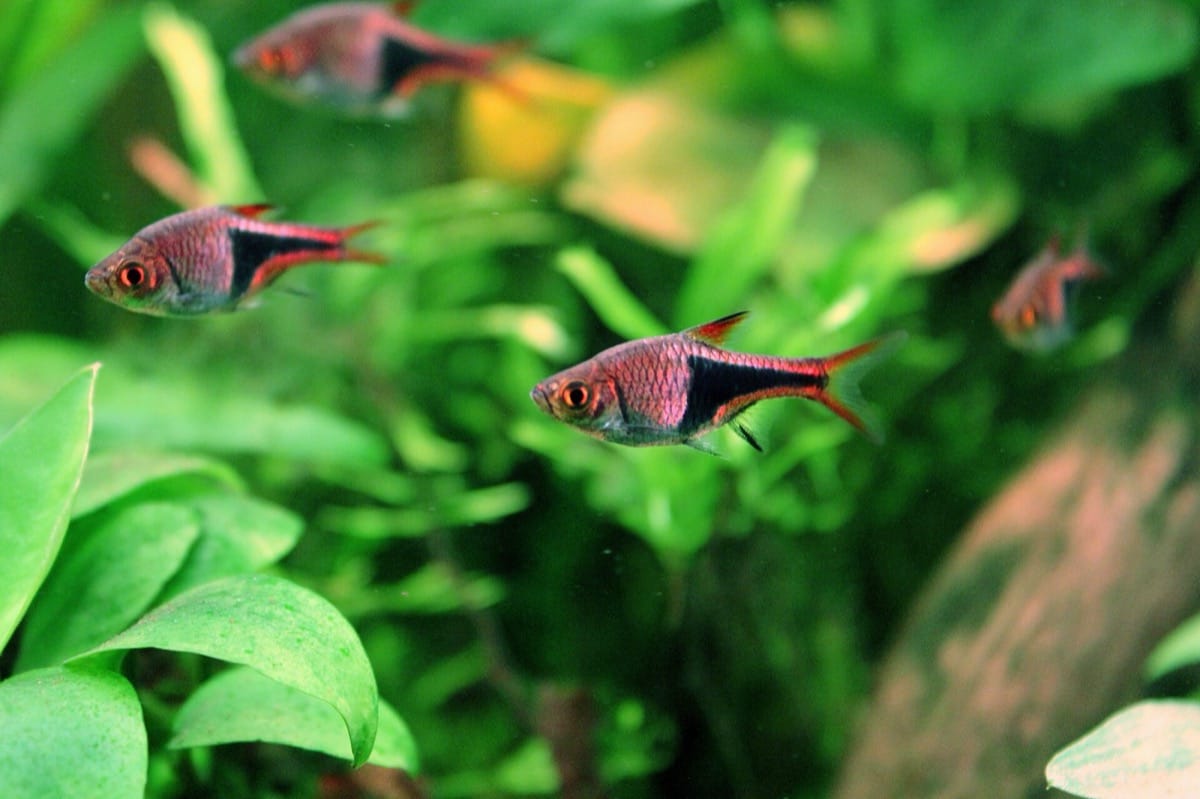
- 22–27°C
- pH 6–7.5
- 60 L+
Best avoided with
Similar species
- 24-26 C
- pH 6.5-7.5
- 40 L+; 45 x 30 cm base
- 21-25 C
- pH 6.0-7.5
- 60 L+; 60 x 30 cm base
- 23–28°C
- pH 5–6.8
- 60 L+
Compare at a glance
| Parameters | Gardneri killifish | Betta | Neon tetra |
|---|---|---|---|
| Parameters | |||
| Temp | 22–26 °C | 24–28 °C | 20–26 °C |
| pH | 6–7.5 | 6–7.5 | 5.5–7.5 |
| GH | 2–12 °dGH | 2–12 °dGH | 2–12 °dGH |
| Min. tank | 50 L | 20 L | 50 L |
| Size | 6 cm | 6 cm | 3 cm |
| Diet | Carnivore | Carnivore | Omnivore |
| Temperament | Semi-aggressive | Semi-aggressive | Peaceful |
| Difficulty | Intermediate | Beginner | Intermediate |
Care guides
New to the words? See the aquarium glossary.
Sources and research notes
Parameters are typical ranges for the species in home aquariums and vary with the individual fish and the water you use.