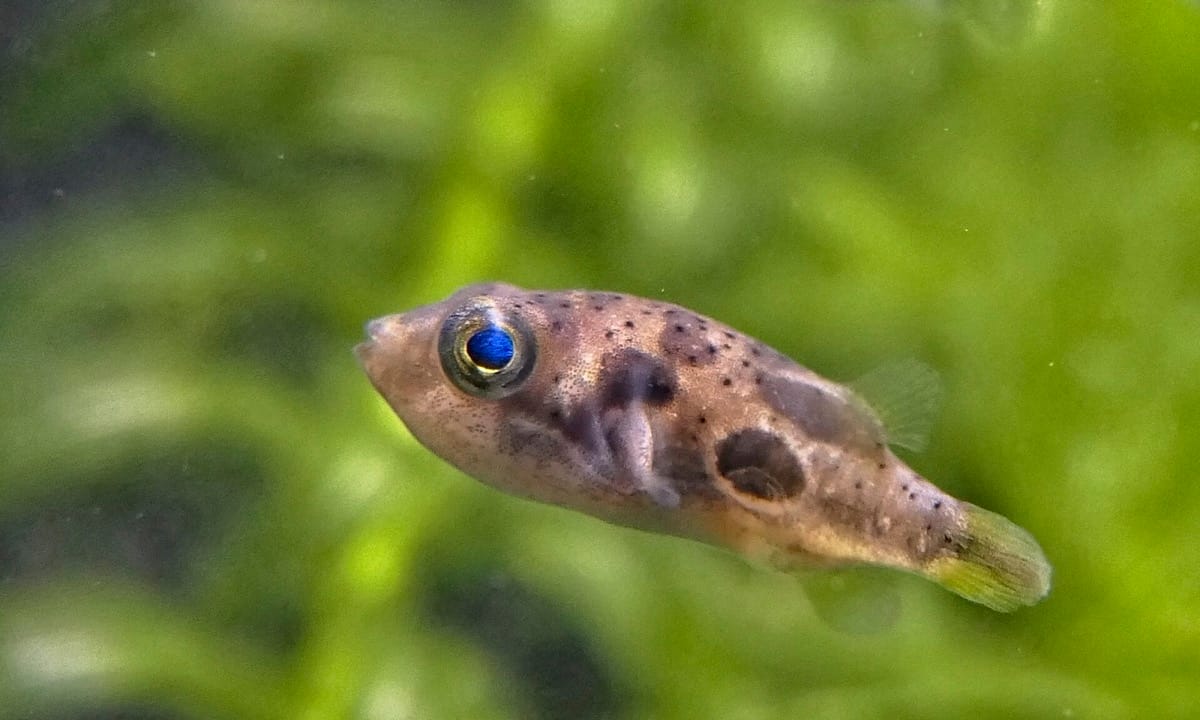
The smallest puffer — a tiny, intelligent oddball with a real bite and a taste for snails.
- Temperature24–28 °C
- pH6.5–7.5
- Minimum tank40 L
- DifficultyIntermediate
Behaviour and habits
The dwarf puffer is the smallest pufferfish in the hobby, a tiny, intelligent oddball that hovers, explores and watches its keeper with real curiosity. It is not a community fish, however: it will nip the fins of tankmates and make a meal of snails and shrimp, and its beak needs hard food to wear down. Best kept alone or as a single male with females in a well-planted nano tank, it is one of the most characterful small fish you can keep.
What to feed, and how often
A carnivore that needs hard-shelled food — snails, bloodworm, brineshrimp and the odd small prawn — to keep its ever-growing beak worn down. Feed once or twice a day, and make sure it gets hard-shelled prey regularly, or its teeth overgrow and it cannot feed.
Water changes and maintenance
Change about 25% weekly in a well-filtered tank, matched closely. It is a messy little predator, so keep the water clean and provide plenty of plants and cover.
Care and how easy it is
Not a community fish: it nips fins and eats shrimp and snails, and it needs hard food for its beak. Best alone or as a small harem in a planted nano tank.
Common health problems
Prone to overgrown beak and to internal parasites; sensitive to poor water.
If it gets sick
Provide hard-shelled food for the beak, keep the water clean, and quarantine and deworm new stock.
Good tank mates
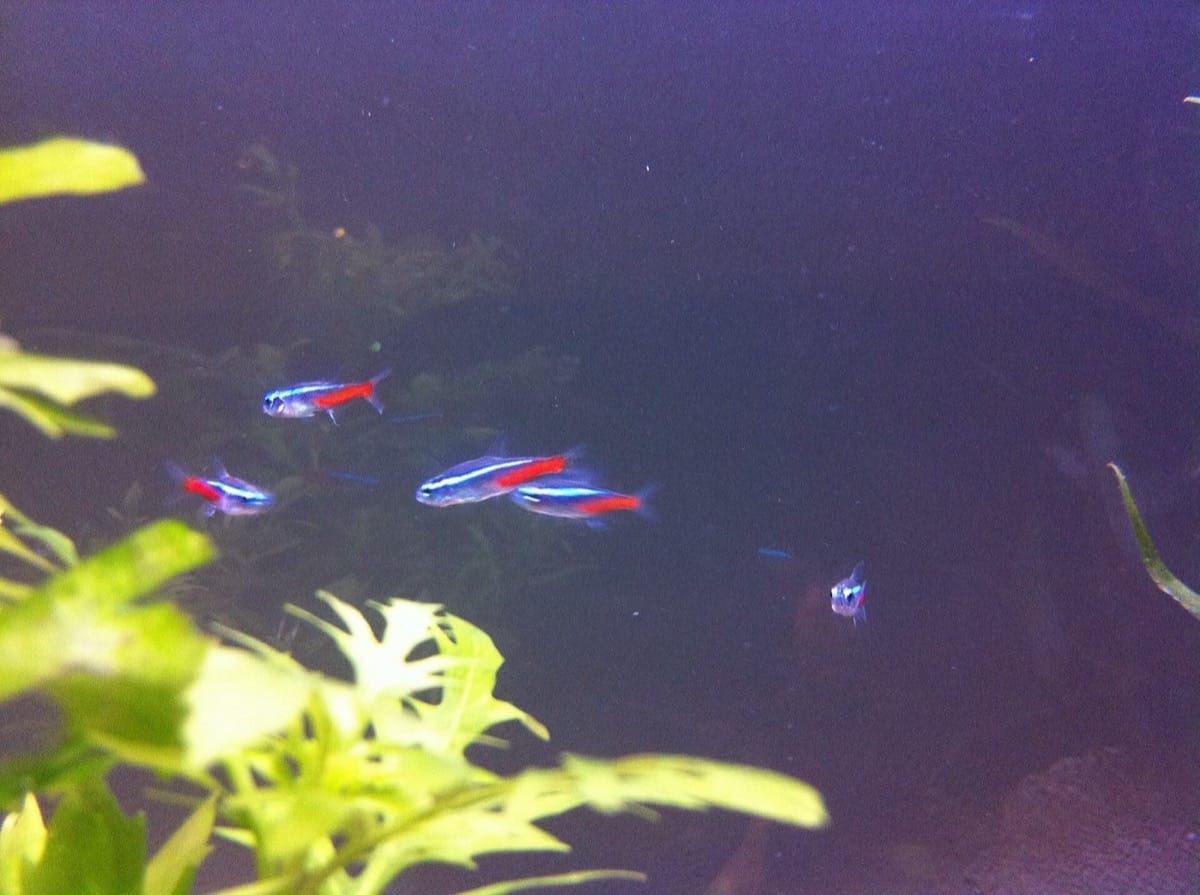
- 21-25 C
- pH 6.0-7.5
- 60 L+; 60 x 30 cm base
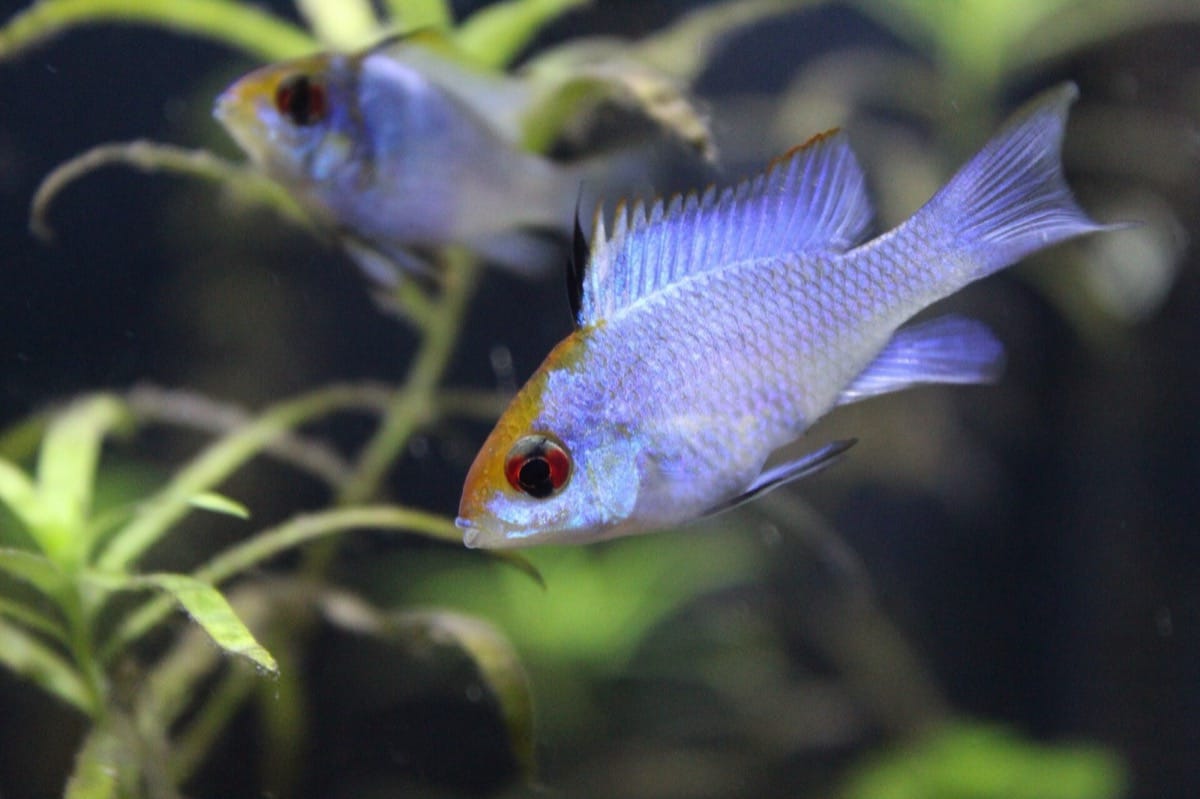
- 25–29°C
- pH 5–7
- 70 L+
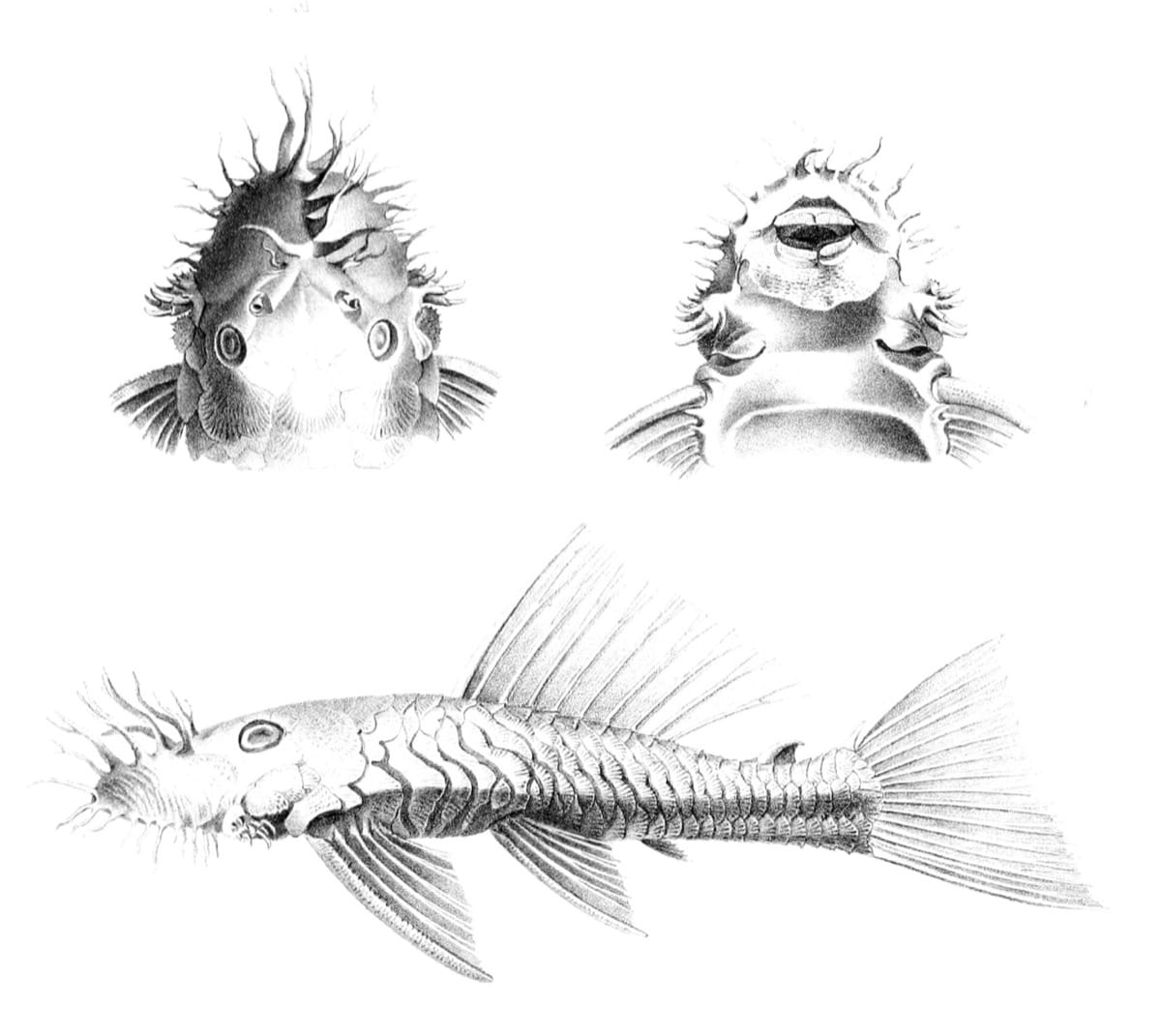
- 23–27°C
- pH 6–7.5
- 80 L+
- 22–27°C
- pH 6–7.5
- 50 L+
Best avoided with
Similar species
- 24-26 C
- pH 6.5-7.5
- 40 L+; 45 x 30 cm base
- 21-25 C
- pH 6.0-7.5
- 60 L+; 60 x 30 cm base
- 25–29°C
- pH 5–7
- 70 L+
- 23–27°C
- pH 6–7.5
- 80 L+
Compare at a glance
| Parameters | Dwarf puffer | Betta | Neon tetra | Ram cichlid |
|---|---|---|---|---|
| Parameters | ||||
| Temp | 24–28 °C | 24–28 °C | 20–26 °C | 25–29 °C |
| pH | 6.5–7.5 | 6–7.5 | 5.5–7.5 | 5–7 |
| GH | 4–15 °dGH | 2–12 °dGH | 2–12 °dGH | 1–10 °dGH |
| Min. tank | 40 L | 20 L | 50 L | 70 L |
| Size | 3 cm | 6 cm | 3 cm | 6 cm |
| Diet | Carnivore | Carnivore | Omnivore | Omnivore |
| Temperament | Semi-aggressive | Semi-aggressive | Peaceful | Peaceful |
| Difficulty | Intermediate | Beginner | Intermediate | Advanced |
Care guides
New to the words? See the aquarium glossary.
Sources and research notes
Parameters are typical ranges for the species in home aquariums and vary with the individual fish and the water you use.