How to Lower Aquarium pH Safely
Lowering pH is harder and riskier than raising it. Here is how it works, the safe ways to do it, and why chasing a number usually backfires.
Lowering pH is difficult because the water resists change (its KH buffer), and because swinging pH is worse for fish than a slightly wrong value. For most keepers the answer is to choose fish that suit the water, not to fit the water to the fish.
When to lower pH
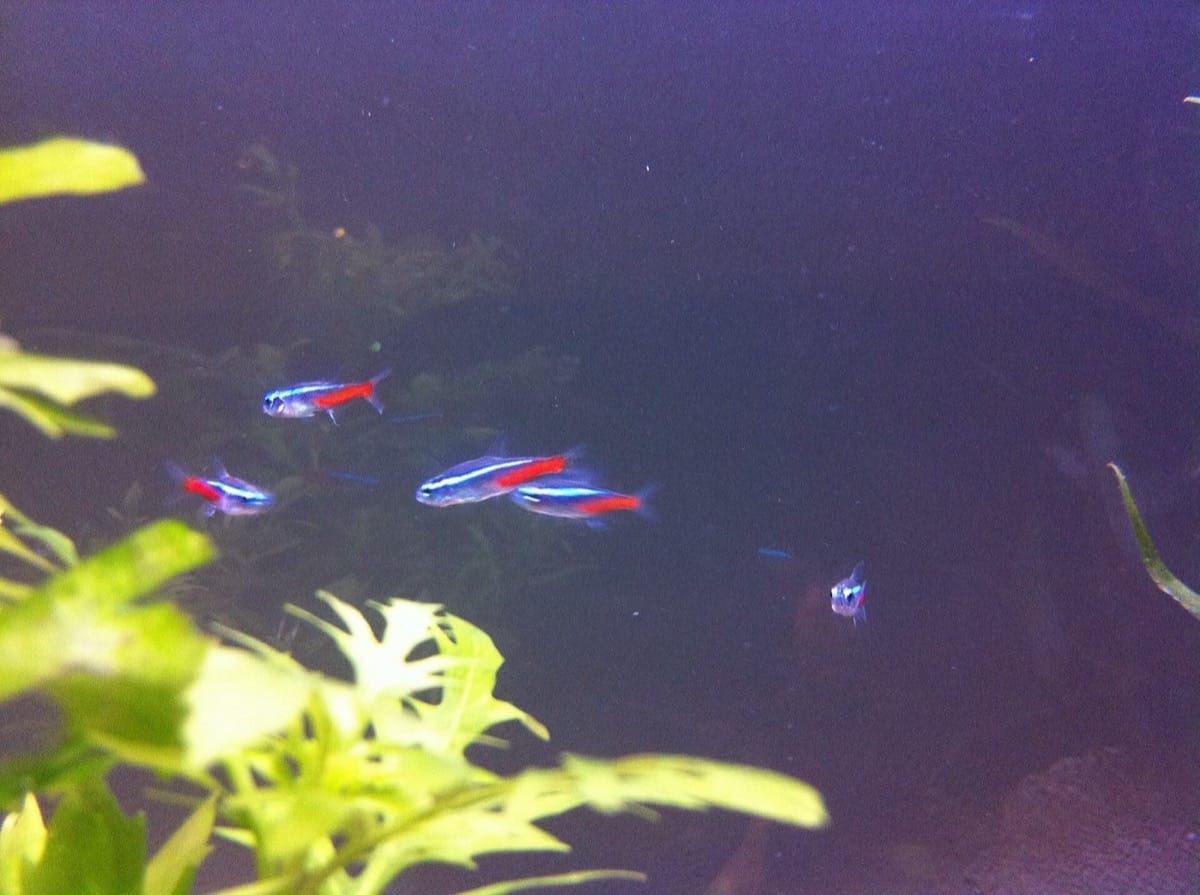
- You keep soft-water species (many tetras, rasboras, dwarf cichlids) in harder tap water.
- You are setting up a blackwater/Amazon-style tank on purpose.
Safe ways to lower pH
- Botanicals — Indian almond (catappa) leaves, alder cones and driftwood release tannins that gently lower pH and add a natural look.
- Peat in the filter does the same.
- Mixing with RO water lowers both KH and pH — the most controllable route for soft-water tanks.
- A buffering substrate for soft-water setups holds a stable, lower pH.
What to avoid
- pH-down chemicals — they cause swings and rarely stay stable.
- Chasing a target — a steady 7.4 is better than a bouncing 6.5.
- Big sudden drops — change pH slowly, ideally over days.
A gentle approach
- Test pH and KH to see how much buffer you are fighting.
- Add botanicals and let them work gradually.
- For real soft water, mix RO with tap to lower KH first.
- Re-test and keep it stable rather than precise.
Why lowering pH is harder
Raising pH is easy because you can add minerals. Lowering it is harder because you are fighting the water's own buffering. Carbonate hardness (KH) resists changes in pH, so in hard, well-buffered water a pH-down product has almost no lasting effect — the water simply pulls pH back to where it was. To lower pH reliably you usually have to reduce KH first, which means changing the water itself, not adding a drop of chemical.
It is also riskier because pH swings are worse than a slightly high value. A fish kept at a steady 7.6 is far healthier than one whose pH bounces between 6.5 and 7.6 as you chase a target.
Safe ways to lower pH
The gentlest methods are also the most stable. Botanicals — Indian almond (catappa) leaves, alder cones and driftwood — release tannins that gently lower pH and add a natural, tea-coloured look. Peat in the filter does the same. A buffering substrate made for soft-water setups holds a stable, lower pH over time. These approaches do not push pH down in one jump; they nudge it, which is exactly what suits fish.
Mixing with RO water
For a real, controllable drop, most serious keepers mix reverse-osmosis (RO) water with tap water. RO is almost mineral-free, so blending it in lowers both KH and pH in a measured way. Choose a ratio, mix it the same way every water change, and the pH settles to a stable new value rather than drifting. This is the reliable route to genuinely soft, acidic water.
What not to do
- Don't use pH-down chemicals to force a number — they cause swings and rarely hold.
- Don't chase a target from a book. Match your fish to stable water instead.
- Don't drop pH fast. Change it slowly, ideally over days, and never in one water change.
A gentle approach
- Test pH and KH so you know how much buffer you are fighting.
- Add botanicals and let them work gradually over weeks.
- For genuinely soft water, mix RO with tap to lower KH first.
- Re-test, keep it stable, and stop once the fish are comfortable.
Test, don't guess
Whatever method you choose, test the result rather than assuming it worked. Check pH and KH before and after, note the figures, and give any change at least a week before judging. If pH barely moves, KH is probably too high for the method you tried, so switch to mixing RO water rather than adding more chemicals.
Put the fish first
If your fish are healthy, eating and active, a pH slightly outside the "ideal" range matters far less than the instability of chasing a number. Stability, clean water and regular changes matter more than an exact figure. Adjust only when a species genuinely needs water your tank cannot provide, and do it slowly and gently.
Why does pH bounce back up?
High KH buffers the water. Until you lower KH (often with RO water), pH returns to its natural level.
Are catappa leaves enough?
They gently soften and tint the water — good for small adjustments, not for large drops.
Should I match the shop's pH?
No. Acclimate fish carefully instead; they adapt to a stable pH far better than to a swinging one.
Related guides
Tools for this guide
Sources and research notes
Guidance follows standard water-chemistry practice; stability matters more than any single pH value, and KH buffers resist change.
Written and edited by the Tankwise Editorial. Every guide answers one real fishkeeping question, is checked against the sources listed above, and is updated when guidance changes. We are an independent editorial desk, not veterinary or aquarium professionals — read how we research and update our guides.
- 22-26 C
- pH 7.0-8.5
- 60 L+; 60 x 30 cm base
- 20–26°C
- pH 7–8.2
- 50 L+
- 22–28°C
- pH 7–8.5
- 70 L+
- 21-25 C
- pH 6.0-7.5
- 60 L+; 60 x 30 cm base