Aquarium Water Testing: What to Test
Testing is the difference between guessing and knowing. These are the readings that matter, when to take them, and what the numbers mean.
You cannot see ammonia, nitrite or most water problems, so testing is the only way to know what is happening. A liquid test kit turns guesswork into something you can act on.
What to test, and why
| Test | Why it matters | Target |
|---|---|---|
| Ammonia | Toxic to fish | 0 |
| Nitrite | Toxic stage of the cycle | 0 |
| Nitrate | Builds up; feeds algae | Keep low |
| pH | Fish health; stability | Steady, suitable range |
| KH / GH | Buffering and hardness | Match your fish |
When to test
- Daily while a tank is cycling or after a problem.
- Weekly in a settled tank, before the water change.
- After changes — new fish, a move, or a filter clean.
Liquid vs strips
Liquid drop kits are more accurate than dip strips, especially for ammonia and nitrite, and are worth the few extra minutes. Whichever you use, read the colour under natural light and follow the timing exactly. See best aquarium test kits.
Acting on the results
Any ammonia or nitrite above zero is urgent — change water and find the cause (ammonia spike). Rising nitrate means more water changes or less feeding (lower nitrate). A shifting pH usually means low KH.
What each reading tells you
Ammonia and nitrite are the two urgent ones: any reading above zero means the filter is not coping, and the response is a water change and an investigation. Nitrate climbing between changes is normal but tells you the routine or stocking is out of step. pH matters most for stability — a steady value suits fish better than a "perfect" one that moves. KH shows how well pH will hold, and GH tells you whether the water suits hard-water or soft-water species. Together they describe the whole picture, not just one number.
When to test what
- Cycling a tank: ammonia and nitrite daily, plus nitrate to see progress.
- A settled community: the three nitrogen tests weekly, before the water change.
- Shrimp or sensitive fish: add KH/GH and temperature to the routine.
- After any change: a move, a big clean, new fish or a medication course.
Turning readings into action
Results only help if they change what you do. Ammonia or nitrite above zero means an immediate water change and no feeding. Nitrate high means more or larger changes, less food, or more plants. A pH that keeps drifting usually means low KH, which calls for buffering rather than pH chemicals. Write the readings down — a simple log reveals trends that a single test cannot, and it is the quickest way to understand your own tank.
Liquid kits vs meters vs strips
Liquid drop kits are the home standard: accurate enough, cheap to run and reliable for the nitrogen tests. Digital pH meters are precise but need calibrating and careful storage. Dip strips are quick but the least precise, and they fade — fine for a rough check, not for the tests that protect fish. Whatever you use, read it in daylight and follow the timing exactly.
Keep a log
The most underrated tool is a simple notebook. Write down the date and your ammonia, nitrite, nitrate and pH each week. After a month you will see patterns no single test can show: the week nitrate began to climb, the dip that followed a big feed, the moment a new fish pushed the filter past its limit. A log turns individual readings into a story, and it makes your water changes purposeful rather than guesswork.
Matching testing to the situation
Testing frequency should follow the risk, not a fixed rule. A brand-new tank being cycled needs daily testing; a mature, lightly stocked community may need only a weekly check; a tank that has just been moved, over-cleaned or stocked with new fish deserves a daily watch for a week. Over-testing a stable tank wastes reagents, while under-testing a fragile one lets problems grow unnoticed.
Common myths
Two myths cost beginners a lot of worry. The first is that a "perfect" pH is required — it is not; stability matters more. The second is that clear water means clean water — it does not, because ammonia and nitrite are invisible. Water can look and smell fine while hiding a toxic spike, which is exactly why a weekly test beats trusting your eyes.
How often should I test a healthy tank?
Once a week, before the water change, is plenty.
Are test strips good enough?
For a rough check, yes; for ammonia and nitrite, liquid kits are more reliable.
Do I need to test every day forever?
No — daily testing is for cycling and emergencies; weekly is enough once stable.
Related guides
Tools for this guide
Sources and research notes
Testing guidance follows standard fishkeeping practice; liquid kits give more reliable readings than strips for the critical nitrogen tests.
Written and edited by the Tankwise Editorial. Every guide answers one real fishkeeping question, is checked against the sources listed above, and is updated when guidance changes. We are an independent editorial desk, not veterinary or aquarium professionals — read how we research and update our guides.
- 22-26 C
- pH 7.0-8.5
- 60 L+; 60 x 30 cm base
- 20–26°C
- pH 7–8.2
- 50 L+
- 22–28°C
- pH 7–8.5
- 70 L+
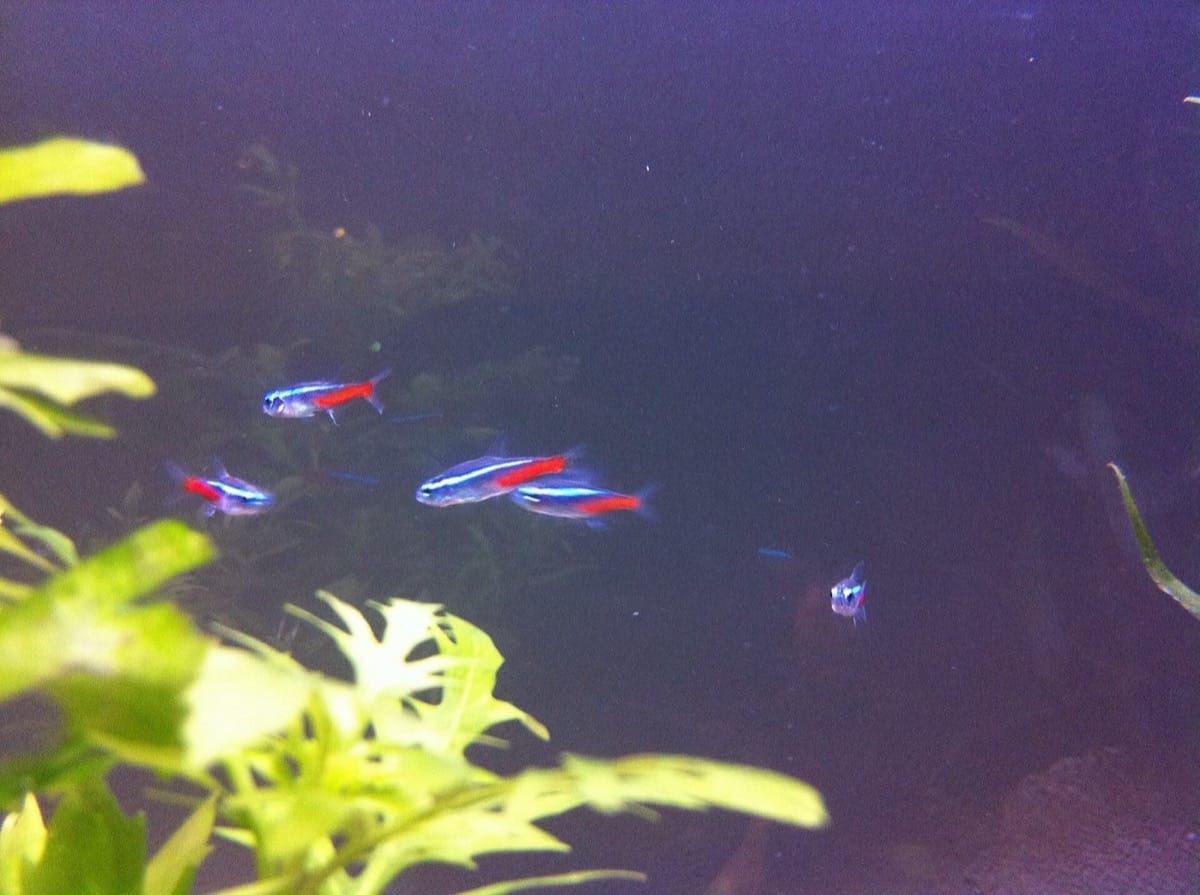
- 21-25 C
- pH 6.0-7.5
- 60 L+; 60 x 30 cm base